
About the book
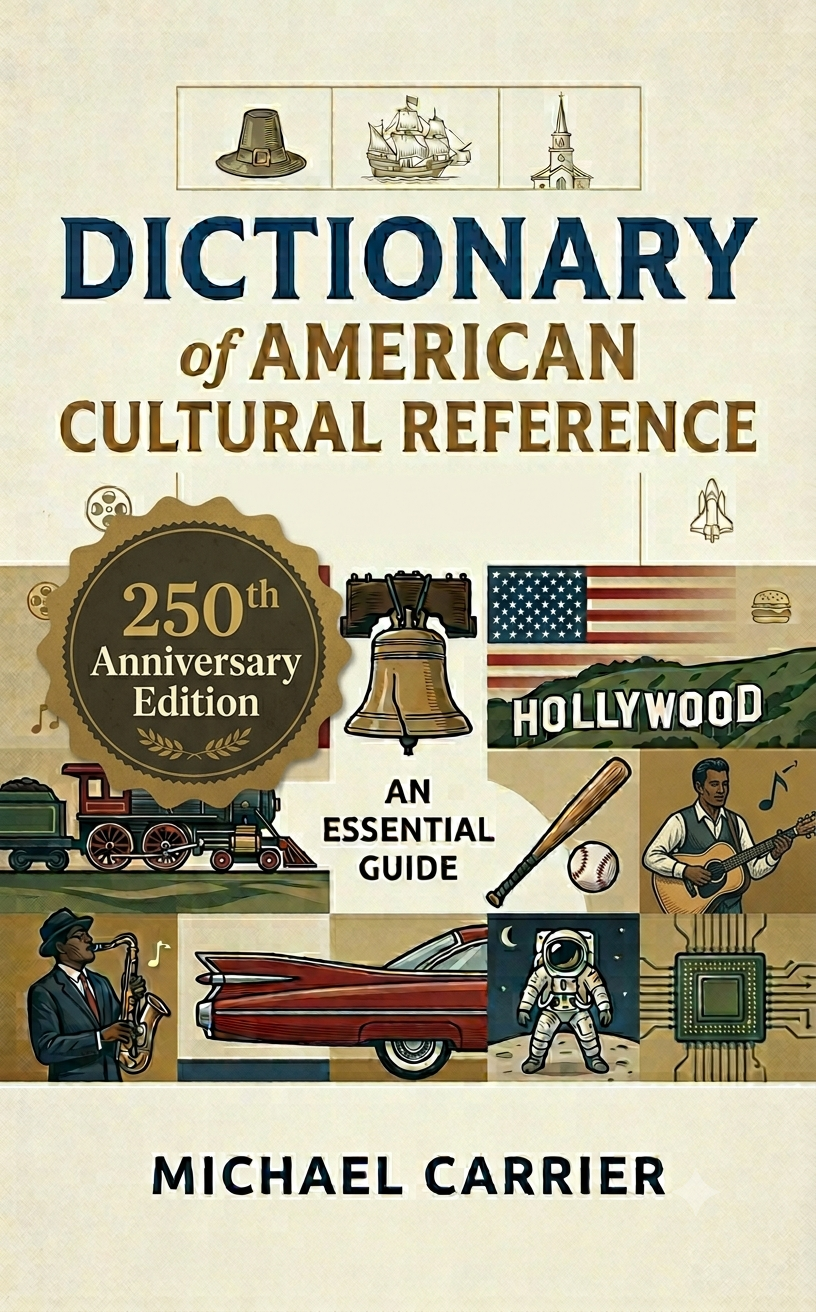
This dictionary explains some of the thousands of cultural references to American life and history that you come across when reading about the USA. It contains 1000 references – it could be 10,000, of course – this is only a selection.
The basic criteria for the selection are that we want to include what a non-American might need to know when reading American books, magazines, newspapers, listening to American podcasts or watching American films and videos.
These are the cultural references to people, places, events, history, institutions etc. that non-locals might not know about – from Mount Rushmore to Denny’s to Frank Lloyd Wright ….
About the book
This book contains 100 of the Latin words that English has stolen to enrich its own language.
All these words are used in English but are drawn from Latin, one of the classical languages that have given so many complex words to English (see our companion books on 100 Persian Words, 100 Greek Words…).
The book is arranged like a dictionary, and each entry gives you:
– The word in English
– Its current meaning in English.
– The origins of the Latin word and what it meant before we borrowed it
– An explanation of how and when you should use it.
– An example using the word in context
– A quotation using the word, so you can spice up your conversation with a literary reference.
About the book
English owes a surprising debt to Persian. Because of the Silk Road and the later British presence in India, many Persian words travelled through Greek, Latin, or Hindi before landing in English.
These words often carry a sense of exoticism, antiquity, or high-level craftsmanship. Here are 100 sophisticated words with Persian roots.
Most of these words entered English through three main “gates”:
- The Crusades: Bringing back words for luxury and war (Azure, Scimitar).
- The Silk Road: Trade words for food and fabric (Orange, Taffeta, Saffron).
- The British Raj: The 200-year occupation of India where Persian was the official court language, giving us administrative and daily terms (Khaki, Pajamas, Jungle).
Subscribe for updates
We will email you only when a new book is available – no unnecessary notifications